
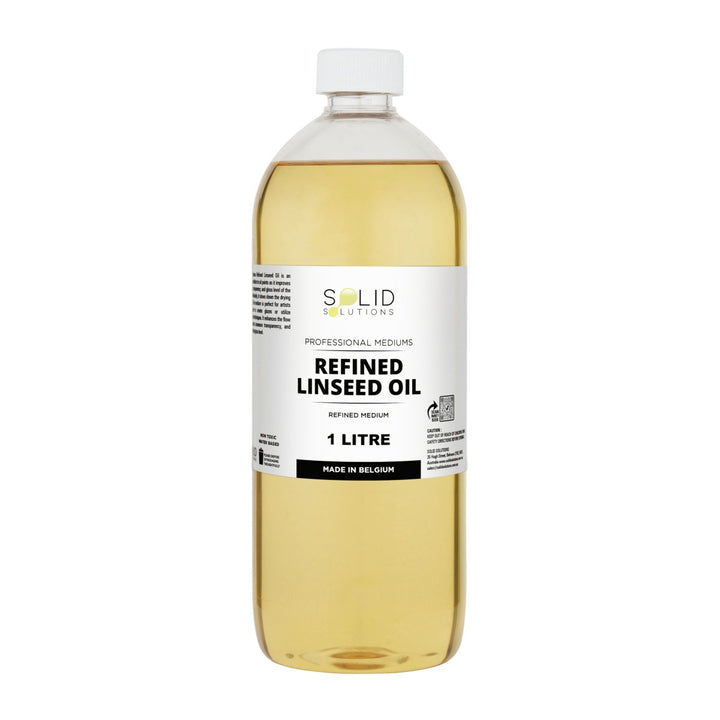
Refined Linseed Oil - 1 Litre
or 4 payments of $7.49 with
 Info
Info


Refined linseed oil is the classic oil painting medium. Solid Solutions Refined Linseed Oil is made in Belgium and refined to remove impurities, giving a clearer, purer oil that is less likely to yellow than raw linseed oil. Add it to oil paint to improve flow, gloss and transparency, and to slow drying so you have more time to blend. The 1 litre bottle suits regular painters, larger works and studios, and it can also be used as a natural oil finish on bare timber.
Product details
Size
1 litre bottle
Type
Refined linseed oil
Made in
Belgium
Use with
Oil paints
Effect on paint
More flow, gloss and transparency
Drying
Slows drying for longer blending
Also suits
Bare, unfinished timber
Key features
Refined for clarity
Less yellowing than raw oil
Improves paint flow
Increases gloss
Glazing medium
Longer open time
Made in Belgium
What refined linseed oil does in oil paint
Better flow
A few drops loosen stiff paint straight from the tube so it moves more easily under the brush, giving smoother, more even brushwork.
Transparency for glazing
The more oil you add, the more transparent the paint becomes. Thin, oil-rich layers let colour glow through, which is the basis of glazing.
Richer gloss
Linseed oil dries to a glossy film, deepening colours and giving a richer finish.
More time to blend
It slows drying compared with paint used straight from the tube, giving you longer for wet-on-wet blending and soft transitions.
Refined vs raw vs boiled linseed oil
Refined linseed oil
Processed to remove impurities for a clearer oil that dries more predictably and is less likely to yellow. The choice for oil painting.
Raw linseed oil
Pressed from flaxseed with no further processing. It is darker, can yellow more and takes the longest to dry.
Boiled linseed oil
Treated or mixed with drying agents so it dries faster. Made for general woodwork rather than artists' paint.
How to use it with oil paint
1
Start with a few drops
Put a small amount of oil on your palette and mix it into your paint with a palette knife. Add more a little at a time.
2
Or dip the brush
For fine control, touch the tip of your brush in the oil before picking up paint.
3
Keep early layers lean
Use less oil in underlayers and more in upper layers (fat over lean) so the painting dries soundly without cracking.
4
Go easy with whites
Use it sparingly in whites and very pale tints, where any slight yellowing shows most.
Using linseed oil on timber
A natural oil finish
Refined linseed oil can be used on bare, unfinished timber. Apply a thin coat with a lint-free cloth, let it soak in, then wipe off all the excess. Allow each coat to dry fully before adding the next. Linseed oil dries slowly, so give it time, and follow the oily rag safety advice below.
FAQs
Safety & storage
Oily rags
Rags and paper soaked in linseed oil can self-heat as they dry. Spread them flat to dry outdoors, or keep them under water in a sealed metal container before disposal.
Ventilation
Use in a well-ventilated area.
Storage
Keep the bottle tightly sealed, in a cool place away from direct sunlight.
Not for consumption
This is an art and timber oil, not a food or supplement oil. Keep out of reach of children.

Refined Linseed Oil - 1 Litre