
Epoxy Resin for River Tables, Resin Art, Casting & Timber
Our epoxy resin range covers every job from a 1mm glass-like coat on timber to a 50mm deep river table pour. Each clear two-part kit suits a different pour depth and working time, so compare the systems below to find the right one for your project.
Epoxy Resin Collections


Popular Epoxy Resin Kits

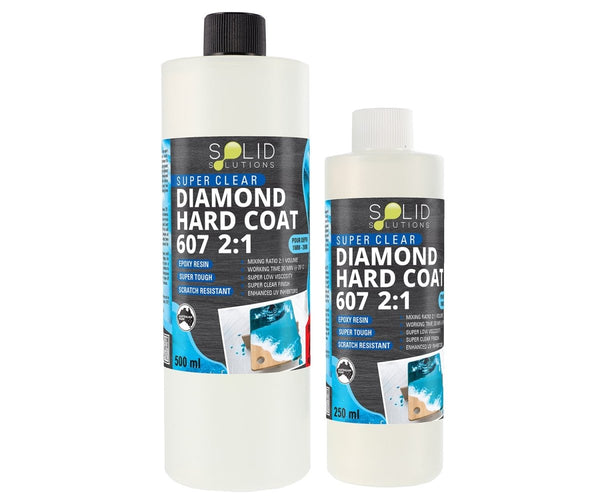

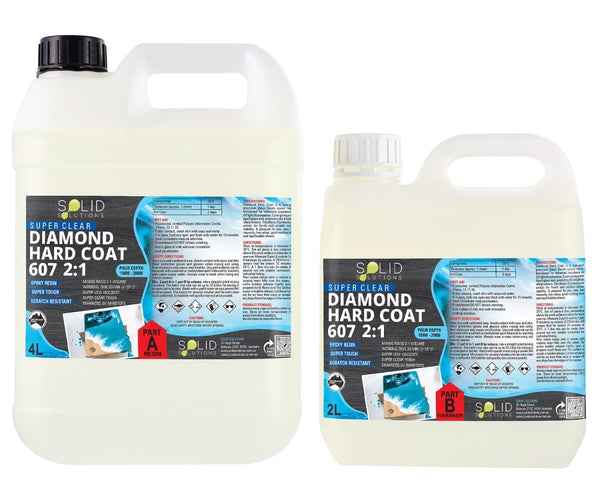
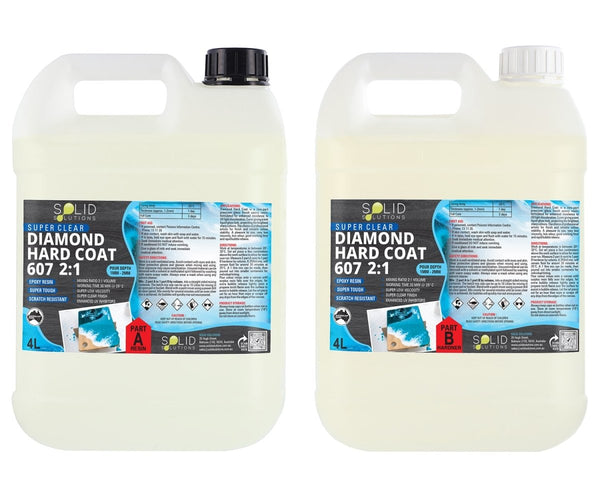
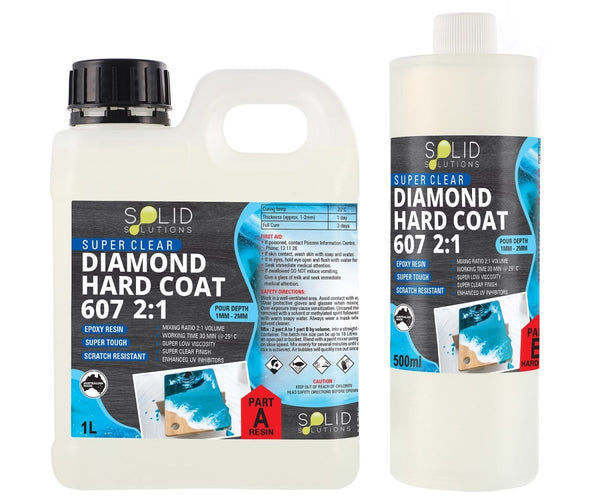
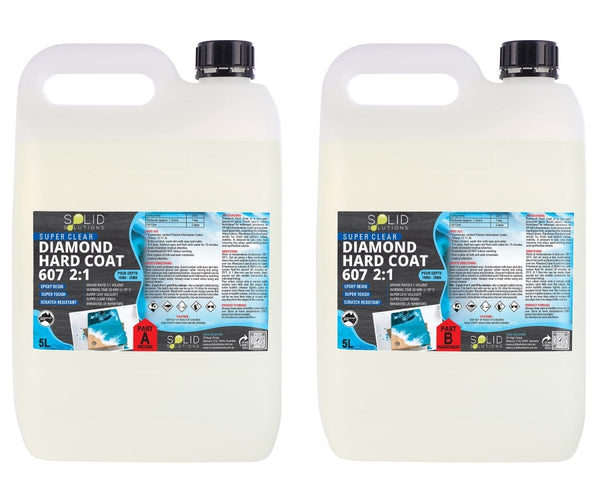
Diamond Hard Coat 607 2:1 | 6L Kit Epoxy Resin

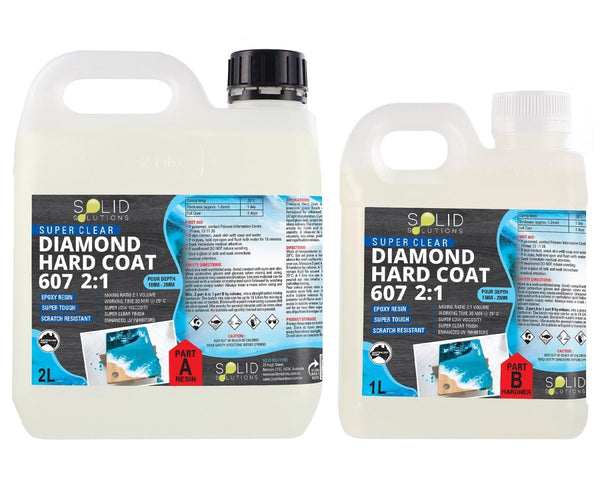
Diamond Hard Coat 607 2:1 | 3L Kit Epoxy Resin




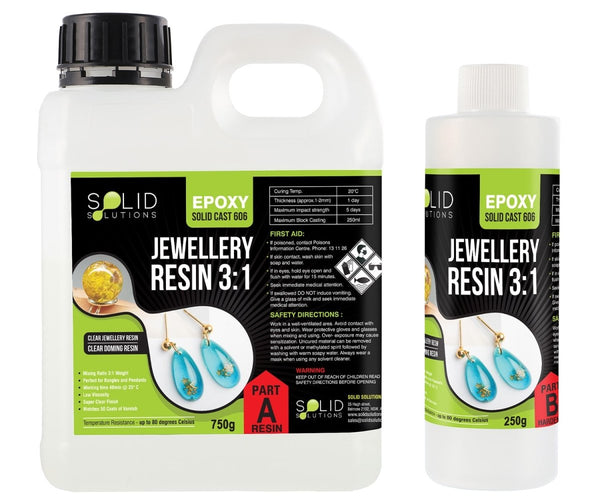
Solid Cast 606 | Resin Jewellery 3:1 - 1kg Kit

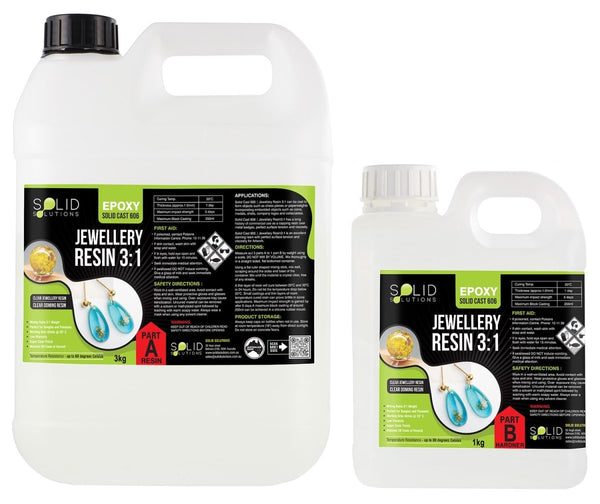
Solid Cast 606 | Resin Jewellery 3:1 - 4kg Kit
Choosing the Right Epoxy Resin
Which epoxy resin do I need? Compare all 8▾
River Resin Deep Cast
Low-exotherm deep pour epoxy for river tables, backlit benchtops and feature pieces.
- Ratio: 2:1 by volume
- Pour depth: 15–50mm per pour
- Working time: 2 hours @ 25°C
Resin Art 609
Tough, flexible, self-levelling coating resin for resin art, decoupage and coating wood.
- Ratio: 1:1 by volume
- Pour depth: 1–25mm
- Working time: 20 min @ 25°C
Art Resin Epoxy
Crystal-clear, high-gloss art resin for canvas coatings, abstract pours and colour work.
- Ratio: 1:1 by volume
- Pour depth: 1–12mm per layer
- Working time: approx. 30 min @ 25°C
Diamond Hard Coat 607
Our clearest hard coat, with enhanced UV resistance for professional artwork and laminating.
- Ratio: 2:1 by volume
- Pour depth: 1–2mm
- Working time: 30 min @ 25°C
Epoxy Casting Resin
Low-bubble casting resin for block casting, moulds, flower preservation and jewellery.
- Ratio: 1:1 by volume
- Pour depth: 1–50mm
- Working time: 60 min @ 20°C
Fast Cure Epoxy
Quick-turnaround resin for coasters, pendants and small moulds. Demould in about 4 hours.
- Ratio: 1:1 by volume
- Pour depth: 1–15mm
- Working time: 15–20 min @ 20°C
Solid Cast 606 Clear Wood
Glass-like top coat for timber, plus knot hole and small defect filling.
- Ratio: 3:1 by weight
- Coat thickness: 1–2mm
- Working time: 40 min @ 25°C
Solid Cast 606 Jewellery
Doming and capping resin for pendants, key rings, badges and small castings.
- Ratio: 3:1 by weight
- Max block casting: approx. 250mL
- Working time: 40 min @ 25°C
Epoxy Resin FAQs▾
What is epoxy resin used for?▾
Epoxy resin is a two-part liquid plastic (resin plus hardener) that cures into a hard, clear, glossy solid. It's used for river tables and benchtops, resin art and canvas coatings, clear coats on timber, casting objects and jewellery in moulds, and filling knot holes and defects in wood.
Which epoxy resin is best for a river table?▾
Use a deep pour epoxy such as River Resin Deep Cast 2:1. It's formulated for pours between 15mm and 50mm with a low exotherm and two hours of working time at 25°C. Pre-seal natural wood edges with Solid Cast 606 first so air in the timber doesn't bubble into the pour.
How deep can I pour epoxy resin?▾
It depends on the system. Coating resins like Diamond Hard Coat 607 and Solid Cast 606 are poured 1–2mm thick, Art Resin Epoxy 1–12mm per layer, Resin Art 609 up to 25mm, Fast Cure up to 15mm, and Epoxy Casting Resin and River Resin up to 50mm. For anything deeper, pour in layers.
What's the difference between coating resin and casting resin?▾
Coating resin is made to self-level in a thin layer over a surface such as a canvas, tabletop or timber. Casting resin is formulated with lower heat build-up as it cures, so it can be poured deeper into moulds and cavities without overheating, cracking or trapping bubbles.
Does epoxy resin turn yellow?▾
All epoxy can yellow slowly with long exposure to UV light. Our river, art, casting and fast cure resins are formulated for UV resistance to reduce yellowing, and Diamond Hard Coat 607 has enhanced UV resistance for artwork where long-term colour stability matters most. Keeping finished pieces out of constant direct sunlight helps them stay clear.
What temperature should I use epoxy resin at?▾
Work and cure between 20°C and 30°C, and don't let the temperature drop below 20°C while the resin cures. In cold weather resin and hardener can turn thick and cloudy; stand the bottles with the caps off in hot water and stir until they're clear and free-flowing before mixing.


- Choosing a selection results in a full page refresh.